
Cold Chain Heat Loss? How Green Building Solutions' JSGREEN001 Panels Reduce Energy Loss
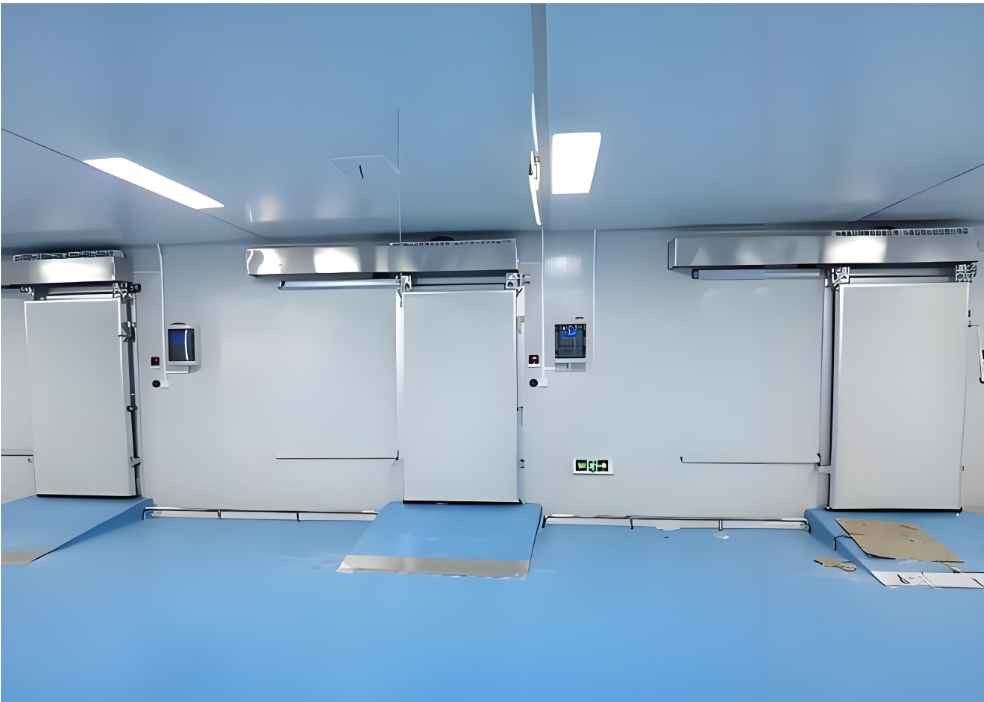
In short: in a cold chain facility that runs 24/7 between −50°C and +15°C, a large share of wasted energy leaves through the building envelope rather than the refrigeration unit. GREEN BIO's JSGREEN001 Cold Storage Panels address that loss with a rigid PU/PIR core, 0.5 mm steel sheet facings, 50 mm or 100 mm panel thickness, 960 mm or 1100 mm effective widths and a stated thermal conductivity of ≤0.024 W/(m·K). The panel's job is simple to state and hard to execute: block heat exchange between indoor and outdoor, continuously, for years.
This article is written for project owners, MEP and refrigeration engineers, and procurement teams who are specifying the envelope of a cold chain logistics park, a pharmaceutical or biological storage building, or a low-temperature chemical facility, and who need to judge whether a panel specification will actually hold its thermal performance in operation.
Jiangsu Green Bio-Environmental Protection Technology Co., Ltd (GREEN BIO) is a Chinese manufacturer of PIR sandwich panels, plywood, steel supports, cable brackets and aluminium profiles. Founded in 2015, the company operates a 10,000 m² facility with a 25-engineer R&D team and supplies insulation and building envelope materials to projects in more than 120 countries and regions, with an export ratio of around 70% and a strong presence in Southeast Asia, Central Asia, Russia, South America and Africa. Its cold storage panel range is marketed under the model designation JSGREEN001.
Where Heat Loss Actually Happens in a 24/7 Cold Chain Building
Heat loss in a cold store is not a single event. It is a continuous inflow of energy that the refrigeration plant must remove again, hour after hour, for the life of the building. Three mechanisms dominate:
- Conduction through the panel field. Every square metre of wall and ceiling conducts heat from the warmer side to the colder side. The rate depends on the core material and the panel thickness.
- Air leakage at joints, penetrations and doors. Panel-to-panel joints, cam-lock seams, door frames and pipe penetrations are where cold air escapes and warm, humid air enters. This is also where condensation and ice build-up start.
- Moisture in the insulation. A core that takes on water vapour loses thermal performance. The specification for this application therefore calls for a closed-cell structure to help prevent water vapour penetration, and a clean, hygienic surface for food, pharmaceutical and clean room use.
The consequence is operational rather than cosmetic. Cold chain facilities described in this application run 24/7 with relative humidity up to 90%, and often sit in coastal high-salt-spray areas, in industrial plants with vibration, or in clean room storage zones. Panels that sag, absorb moisture or leak at the seams convert directly into compressor run-time, temperature excursions and maintenance call-outs.
Why Cold Chain Envelope Performance Is Now a Green Building Question
Refrigeration energy is one of the largest controllable loads in a cold chain building, so envelope performance sits at the centre of green building evaluation rather than at its edge. Several published reference points frame the context.
China's green building materials market was valued at USD 216.3 billion in 2025 and is projected to reach USD 484.9 billion by 2034, a CAGR of 9.10% (IMARC Group, 2025 base year). The same policy environment requires that 100% of new urban buildings in China meet green building standards by 2025, as mandated in the 14th Five-Year Plan. Nationally, green building performance is assessed under GB/T 50378-2019, most recently updated in 2024, which rates buildings on a one-to-three-star scale and organises assessment around safety and durability, health and comfort, occupant convenience, resource saving, and environmental livability.
That last dimension is where an insulated envelope earns its place. A panel that holds its thermal performance reduces the energy a building consumes in operation, which is exactly what resource-saving criteria measure. In procurement terms, the practical question is not whether a panel is "green" in the abstract, but whether its declared core, thickness, conductivity and joint system can be documented and verified for the project at hand.
Demand direction supports the same conclusion. The U.S. EPA defines green building as the practice of creating structures that are environmentally responsible and resource-efficient throughout a building's life-cycle, and CalRecycle frames green building as using resources with less waste and pollution while lowering operating costs over the life of a building. For a cold store running continuously, life-cycle operating cost is dominated by energy — which makes the envelope a cost decision as much as a sustainability one.
Scenario note: cold storage panel applications of this type are common in Germany and across the EU, where food cold chain warehousing, pharmaceutical storage and multi-temperature distribution centres are specified around continuous operation and strict temperature control. Project-specific regulatory requirements should always be confirmed against the applicable local rules for the building's location and use.
How JSGREEN001 Cold Storage Panels Reduce Energy Loss
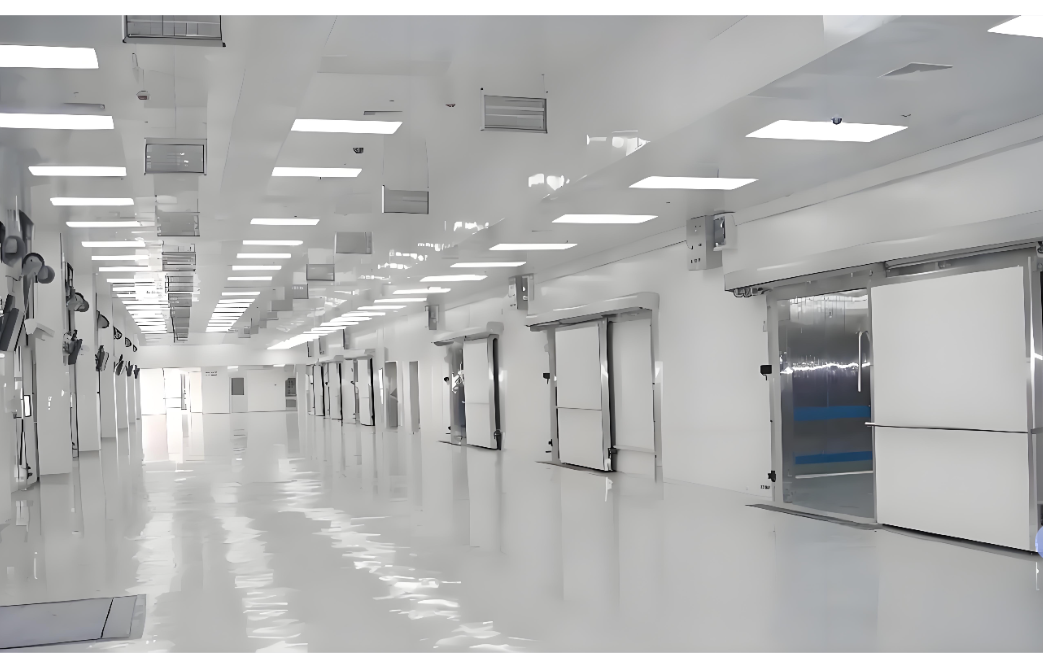
JSGREEN001 is a prefabricated insulated sandwich panel: a rigid polyurethane (PU) or polyurethane-isocyanate (PIR) core bonded between steel facings, produced as modular units that are assembled on site. The panel is the enclosure structure of the cold room, and its documented role in this application is to block heat exchange between indoor and outdoor through efficient thermal insulation, maintaining a stable internal temperature and reducing the energy consumption of the refrigeration equipment.
Panel Build: PU/PIR Core, 0.5 mm Steel, 50 mm and 100 mm
The specification relevant to a cold chain project is compact and checkable:
- Core material: PU / PIR rigid polyurethane.
- Panel thickness: 50 mm and 100 mm as standard options, with customization available from 50 mm to 200 mm.
- Steel sheet: 0.5 mm facings.
- Thermal conductivity: ≤0.024 W/(m·K).
- Fire rating: B1 / B2, with a fire-retardant B1-grade PIR option.
- Effective width: 960 mm / 1100 mm.
Thermal conductivity is the number that decides how much heat crosses the panel per degree of temperature difference. At ≤0.024 W/(m·K), the core is doing the work that a thicker, lower-performing material would otherwise have to do — which matters in a building where the inside-to-outside temperature difference can be 50 K or more for every hour of the year.
The 50 mm and 100 mm thicknesses give project teams two starting points, and the 50–200 mm customization range allows the envelope to be matched zone by zone: a −18°C freezer, a 0–4°C chiller and a multi-temperature distribution hall do not need identical panel build-ups. Steel sheet colour and material, fire rating, custom dimensions and cam-lock types are also selectable, which is what makes the panel usable as a prefabricated green building material system rather than a single fixed product.
The B1-Grade PIR Option and Fire Performance
Cold stores concentrate two risks in one envelope: continuous refrigeration load and a building full of combustible packaging. The JSGREEN001 range is offered as fire-retardant B1-grade PIR panels, with B1 and B2 fire ratings listed in the specification so that the panel can be matched to project fire requirements rather than assumed. Fire performance should be confirmed against the requirement of the specific building, its height, occupancy and local code, and supporting documentation should be requested with the quotation.
Widths, Joints and Air-Tightness
Conduction is only half of the heat exchange problem. The other half is air. A 1100 mm effective width reduces the number of vertical joints for a given wall length compared with a 960 mm module, and fewer joints mean fewer potential leakage paths — provided the joints are properly designed and sealed. Good air-tightness to reduce cold air leakage is an explicit requirement of this application, alongside sealing tape, fasteners and installation accessories that close the envelope at panel seams, door frames and penetrations.
The panel surface matters here too. A clean, hygienic face is required for food, pharmaceutical and clean room storage, and a closed-cell core limits water vapour penetration in environments where relative humidity reaches 90%. Anti-condensation and anti-dew performance at these humidity levels is what prevents the slow decline in insulation value that shows up years later as unexplained compressor load.
Certification and Quality Control Behind the Panel
GREEN BIO operates under ISO 9001, ISO 14001 and ISO 45001 management-system certifications covering quality, environmental and occupational health and safety management. Certification is a screening signal, not a substitute for project documents: buyers should request the certificate scope, issuing body and validity dates, and confirm they cover the product and process being purchased.
The manufacturing controls behind JSGREEN001 follow four checkpoints: incoming raw material inspection, in-process patrol inspection, full inspection of finished product density and dimensions, and pre-shipment photo confirmation. Density matters because core density and foam uniformity are what hold thermal performance and panel flatness together over years of operation — not just on the day of delivery.
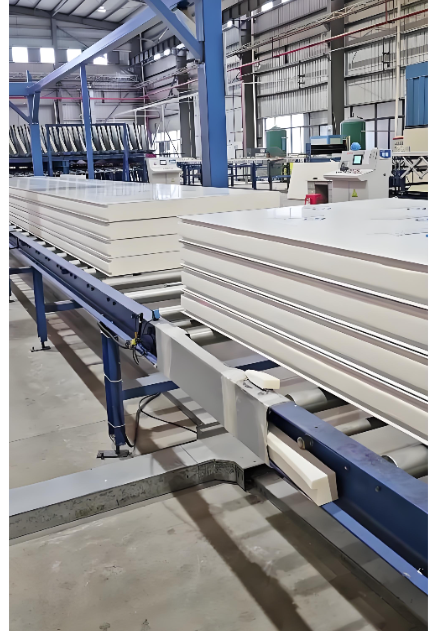
Step-by-Step: Specifying JSGREEN001 Panels for a Cold Chain Project
The sequence below reflects how a panel specification is actually built and verified, from temperature zoning through to after-sales support.
- Map the temperature zones. List every room and its operating band within the −50°C to +15°C range: freezer, chiller, quick-freezing storage, ante-room, dispatch. Continuous 24/7 operation is the design assumption, not an exception.
- Assign panel thickness and core per zone. Choose from 50 mm or 100 mm, or specify a custom thickness within the 50–200 mm range, with PU or PIR core. Confirm the fire rating (B1 or B2) required for each zone and select the B1-grade PIR option where the project calls for it.
- Fix the panel geometry. Select effective width (960 mm or 1100 mm), custom lengths, steel sheet colour and material, and cam-lock type so that panels arrive cut to the room rather than cut on site.
- Match the supporting equipment. Panels are the envelope, not the system. The room also requires refrigeration unit, air cooler, tube evaporator, temperature and humidity control system, dehumidifier, fire sprinkler system, cold storage door, loading platform door seal, sealing tape and fasteners. Confirm interfaces — door frames and penetrations are where air-tightness is won or lost.
- Plan for the operating environment. Flag coastal high-salt-spray conditions, vibration from industrial plant, and clean room requirements at specification stage, because they affect facing material and surface finish choices.
- Verify production and inspection. Agree the inspection points — incoming raw material, in-process patrol, finished density and dimensions, pre-shipment photo confirmation — and the documentation package to be delivered with the panels.
- Plan installation and after-sales. Typical lead time is 15–25 days after receipt of deposit. GREEN BIO provides installation guidance videos, remote technical support, and free replacement of damaged parts during the warranty period.
Use Cases: Where the Panel's Thermal Role Decides the Outcome
Cold storage panels are used across industries where temperature stability is a compliance or quality requirement, not a comfort preference. The table below maps the sectors named in the JSGREEN001 application data to what the panel is doing in each.
| Sector | Typical stored goods | Panel function |
|---|---|---|
| Food & Beverage | Meat, seafood, dairy, fruits, vegetables, beverage processing | Blocks heat exchange to hold stable room temperature; closed-cell core and hygienic surface support food-safety conditions |
| Pharmaceuticals | Vaccines, medicines and biological products requiring strict temperature control | Maintains a temperature and humidity controllable space so that storage compliance is achievable |
| Logistics & Warehousing | Cold chain logistics centres, distribution hubs, supermarkets | Separates frozen, chilled and ambient zones inside one building; modular panels speed up assembly |
| Chemical Industry | Low-temperature chemical raw materials | Insulated enclosure for low-temperature storage, with anti-corrosion considerations for aggressive environments |
| Agriculture | Seed storage and agricultural product preservation | Pre-cooling and preservation rooms where temperature stability protects product value |
In these applications the panel is credited with more than an energy figure. Documented functions include maintaining a temperature and humidity controllable storage space that delays deterioration — for example, extending food shelf life by more than 50% — and reducing refrigeration energy consumption, with an energy saving rate that can reach more than 30% in this application. Those figures describe the enclosure function in operation; actual results depend on panel thickness selection, room design, equipment sizing and how well the envelope is sealed.
Project Evidence
Two delivered projects show the range of scale the panel is used at — one a food processing plant with freezer and chiller rooms, the other a large multi-temperature sorting centre.
| Project type | Location | Scope | Application | Operating period | Reported result |
|---|---|---|---|---|---|
| Food processing plant / meat processing factory | Australia | 5,000 m² cold storage panels; 2,000 tonnes capacity | Low-temperature freezer (−18°C) and chiller room (0–4°C) | Stable operation for 5 years | Precise temperature control; seamless joints prevent cold air leakage; successfully passed GSP certification |
| 3PL cold chain logistics / supermarket distribution centre | Vietnam | 12,000 m² large-scale sorting centre | Multi-temperature distribution centre (frozen / chilled / ambient) | 1 year (new project) | Delivered on schedule; easy installation; effectively improved cargo turnover efficiency |
The engineering detail behind those results is worth noting for anyone evaluating a panel supplier. High-strength double-sided colour steel sheets combined with precision foaming deliver panel flatness and load-bearing capacity, and the standardised modular design is reported to increase on-site installation speed by 30% — a meaningful factor in cold chain projects where commissioning dates drive revenue.
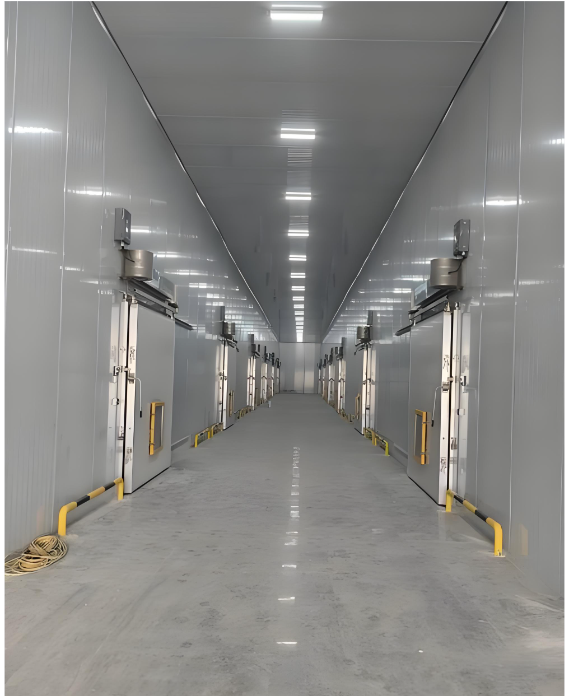
Comparison: What the JSGREEN001 Specification Actually Decides
Buyers comparing cold storage panels often receive similar-looking datasheets. The table below restates the JSGREEN001 specification against the decision it affects, so the numbers can be checked rather than assumed.
| Specification | Stated value | What it decides in a 24/7 cold chain project |
|---|---|---|
| Core material | PU / PIR rigid polyurethane | Whether the panel delivers closed-cell insulation with low water vapour penetration for the life of the room |
| Panel thickness | 50 mm, 100 mm; custom 50–200 mm | How much insulation depth is applied per zone, from chiller to freezer |
| Steel sheet | 0.5 mm | Facing durability, panel flatness and cleanability for food, pharma and clean room use |
| Thermal conductivity | ≤0.024 W/(m·K) | Heat conducted through the panel field per degree of temperature difference |
| Fire rating | B1 / B2; B1-grade PIR option | Whether the envelope meets the fire-retardant requirement set for the building |
| Effective width | 960 mm / 1100 mm | Number of vertical joints across a wall length, and therefore the number of leakage paths to seal |
| Customization | Thickness, steel colour and material, fire rating, dimensions, cam-lock types | Whether the panel is prefabricated to the room or adapted on site |
| MOQ / lead time | 100 m² or one 20 ft container; 15–25 days after deposit | Whether the specification fits the project schedule and order size |
A second comparison worth running is between suppliers rather than panels. The verifiable checks are the same in every case: core material and density control, declared thermal conductivity, fire rating documentation, effective width and joint system, finishing quality, inspection records, and the supplier's ability to deliver a specified thickness on a stated lead time. Sustainable green building construction solutions are only sustainable if the declared numbers survive transport, installation and five years of −18°C operation.
Frequently Asked Questions
What fire rating and certifications should I verify on a cold storage panel for a 24/7 facility?
JSGREEN001 panels are supplied as fire-retardant B1-grade PIR panels, with B1 and B2 fire ratings listed in the specification, so the panel can be matched to the fire requirement of the building rather than assumed. The application specification also calls for a closed-cell structure to help prevent water vapour penetration and environmentally friendly materials such as a CFC-free foaming agent. On the supplier side, GREEN BIO operates under ISO 9001, ISO 14001 and ISO 45001 management-system certifications; request certificate scope, issuing body and validity dates, and confirm the panel documentation against the fire and building rules that apply where the facility is located.
Can GREEN BIO supply panels for a large cold chain logistics park, and can the panels be customized?
Yes. JSGREEN001 cold storage panels are suitable for large cold chain logistics park projects and for food, pharmaceutical, chemical and agricultural storage buildings. GREEN BIO works in OEM/ODM mode with a monthly capacity of 50,000 square metres, and customization covers panel thickness from 50 mm to 200 mm, steel sheet colour and material, fire rating, custom dimensions and lengths, and cam-lock types. The company operates a 10,000 m² facility with a 25-engineer R&D team.
What is the minimum order quantity and how is a cold storage panel order priced?
The MOQ is 100 square metres or one 20 ft container, which allows a project to start with a single room or a trial quantity before scaling to a full building. Because the panel is configured by core type, thickness, steel sheet, fire rating, dimensions and cam-lock type, pricing is quoted against the confirmed configuration and order volume rather than a single list figure. Sharing your room schedule and temperature zones is the fastest way to receive a comparable quotation.
How can I validate panel quality before committing to the full order?
Quality is controlled at four documented checkpoints: incoming raw material inspection, in-process patrol inspection, full inspection of finished product density and dimensions, and pre-shipment photo confirmation. Finished density and dimensional inspection are the two checks that most directly relate to thermal performance and installation fit, and pre-shipment photo confirmation gives buyers a record of the panels before they leave the factory. After delivery, GREEN BIO provides installation guidance videos and remote technical support, and replaces damaged parts free of charge during the warranty period.
What is the lead time for JSGREEN001 cold storage panels?
Typical lead time is 15–25 days after receipt of deposit, against a monthly production capacity of 50,000 square metres. For projects with fixed commissioning dates, confirm the delivery schedule together with the panel configuration — thickness and cam-lock customization, order volume and destination all affect when panels can be on site. To move from evaluation to a firm schedule, send your temperature zones, panel quantities and destination port for a quotation, and download the GREEN BIO product catalogue for the full panel and envelope range.
Conclusion: The Envelope Is the First Energy Decision
In a cold chain building running 24/7 between −50°C and +15°C, energy loss is decided long before the refrigeration unit is switched on. It is decided by the core material, the panel thickness, the steel facing, the effective width and — above all — how well the joints are designed and sealed. JSGREEN001 Cold Storage Panels address that decision with a rigid PU/PIR core, 0.5 mm steel sheets, 50 mm or 100 mm thickness with customization to 200 mm, 960 mm or 1100 mm effective widths, a stated thermal conductivity of ≤0.024 W/(m·K) and a fire-retardant B1-grade PIR option, backed by ISO 9001, ISO 14001 and ISO 45001 management-system certifications.
For procurement teams evaluating a Chinese supplier of eco-friendly green building materials for a cold chain project in Germany, the wider EU, or Belt and Road markets, the practical test is documentation: declared conductivity, verified density control, fire rating evidence, joint detailing and a delivery schedule that matches commissioning. Those are the facts that determine whether a green building envelope delivers the energy performance it was specified for.
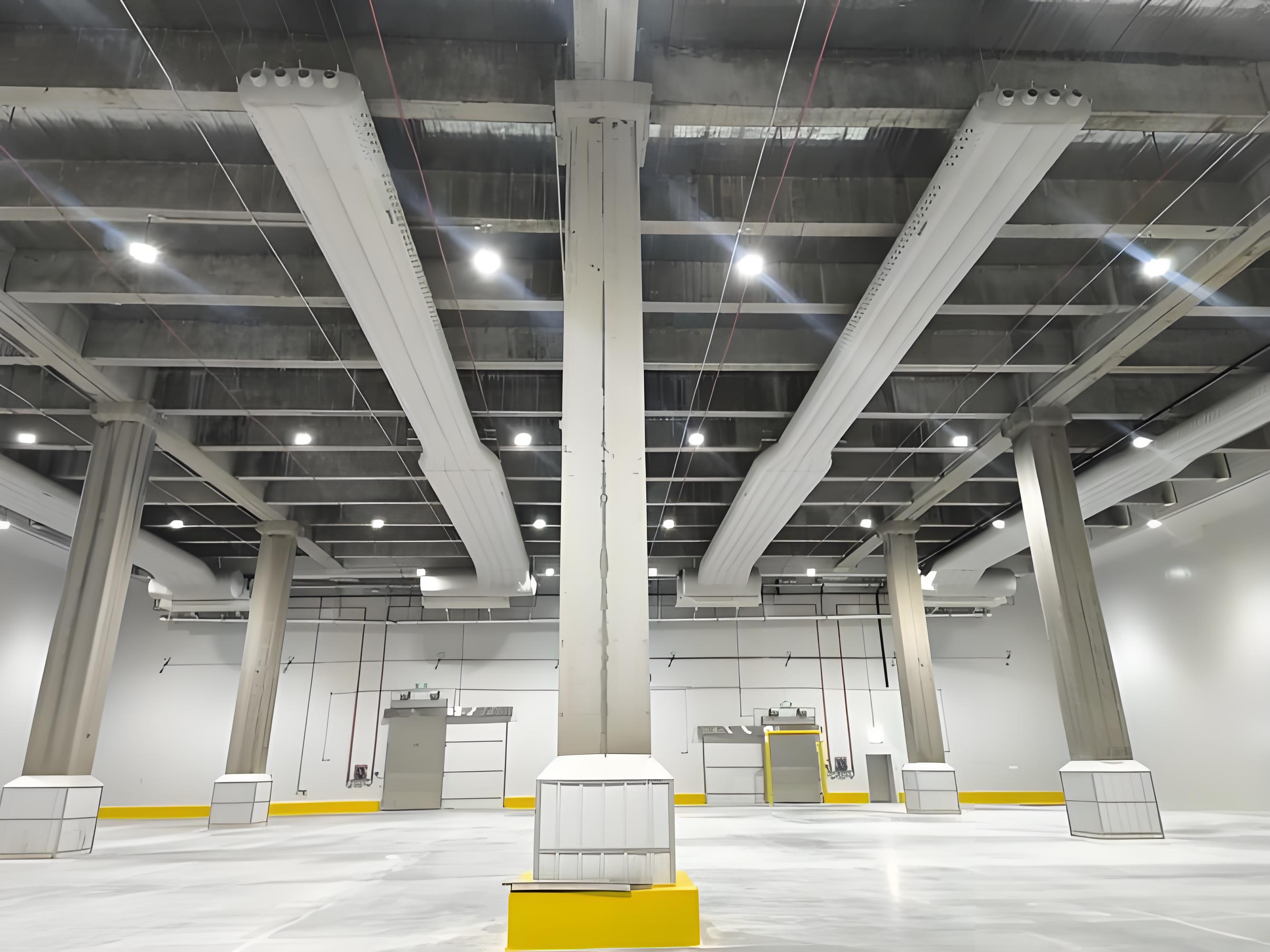
Next Step: Match the Panel to Your Temperature Zones
Send GREEN BIO your room schedule — temperature band per room, panel quantities, preferred thickness and destination — and the team will confirm the JSGREEN001 configuration, MOQ and lead time for your project.
Website: www.greenlvgreen.com | Email: sunnylvgreen@163.com | WhatsApp: +852 55715742
Download the catalogue: Green Bio Professional Catalog 2026 (PDF)
Have Questions or Need More Details?
Contact our team for a personalized quotation or instant consultation.
Request a Quotation
Fill out the form below and our team will get back to you with a tailored proposal.
WhatsApp Direct Chat
Prefer to chat in real-time? Message us on WhatsApp for instant assistance & quick answers.
- Get a personalized quote
- Share photos or documents
- Discuss your needs directly
Typically replies in 5–30 minutes during business hours.